
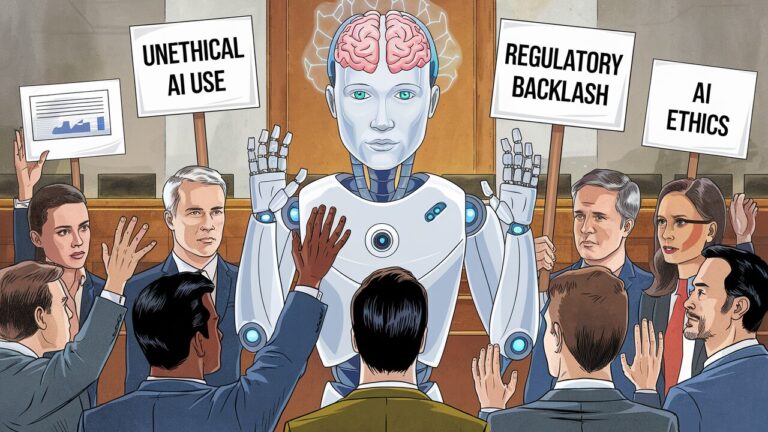
As artificial intelligence (AI) becomes increasingly integrated into business operations, ethical concerns surrounding its use have come to the forefront. Unethical AI practices, such as bias in decision-making, lack of transparency, and misuse of data, can lead to severe legal and regulatory consequences. The regulatory landscape is evolving rapidly, with new laws and guidelines being introduced globally to ensure responsible AI usage. Is your business prepared to navigate these changes?
The Growing Importance of AI Ethics
AI has the potential to revolutionize industries, but it also poses significant ethical challenges. A report by Stanford HAI highlights that many technology companies struggle to implement their stated AI ethics principles effectively. Despite the adoption of AI ethics policies, institutional support and practical implementation are often lacking. This gap can lead to significant risks as businesses fail to address ethical considerations adequately (Stanford HAI).
Regulatory Crackdown on Unethical AI
In response to growing concerns, governments worldwide are introducing regulations to govern AI usage. The European Union’s AI Act, expected to be finalized in early 2024 which aims to regulate AI systems comprehensively. The act categorizes AI applications by risk level and imposes stringent requirements for high-risk systems, including transparency, data governance, and safety protocols. It also mandates ongoing monitoring and review to ensure compliance (Centraleyes).
In the United States, the Biden Administration’s Executive Order on Safe, Secure, and Trustworthy AI outlines new standards for AI safety and security. The Federal Trade Commission (FTC) has also been active in prosecuting companies whose AI systems result in biased or discriminatory outcomes. Companies using AI that leads to unfair treatment can be held liable under the FTC Act, highlighting the importance of responsible AI deployment (Holland & Knight).
Ethical Challenges and Compliance
Bias and Discrimination: AI systems can inadvertently perpetuate biases present in their training data. This can lead to discriminatory practices, particularly in areas like hiring, lending, and law enforcement. Ensuring fairness and eliminating biases in AI algorithms is critical to avoiding legal repercussions and maintaining public trust (Maginative).
Transparency and Accountability: Transparency in AI decision-making processes is essential for accountability. Users and regulators need to understand how AI systems arrive at their decisions. Implementing Explainable AI (XAI) techniques can help demystify AI operations and foster trust (Lumenalta).
Data Governance: Proper data management practices are crucial to ensuring the ethical use of AI. This includes securing data, maintaining user privacy, and ensuring compliance with data protection laws. The European Union’s General Data Protection Regulation (GDPR) and similar laws in other jurisdictions mandate rigorous data governance standards (Stanford HAI).
Preparing for the Regulatory Backlash
- Implement Robust AI Ethics Frameworks:
- Ensure Compliance with Evolving Regulations:
- Promote Transparency and Accountability:
- Adopt a Proactive Approach to Risk Management:
Key Takeaways
- Unethical AI practices pose significant legal and regulatory risks that can affect business operations and reputation.
- Global regulatory efforts are intensifying, with comprehensive frameworks like the EU AI Act setting new standards for AI governance.
- Businesses must implement robust AI ethics frameworks and ensure compliance with evolving regulations to mitigate risks.
- Transparency, accountability, and proactive risk management are essential to navigating the complex landscape of AI ethics and regulation.